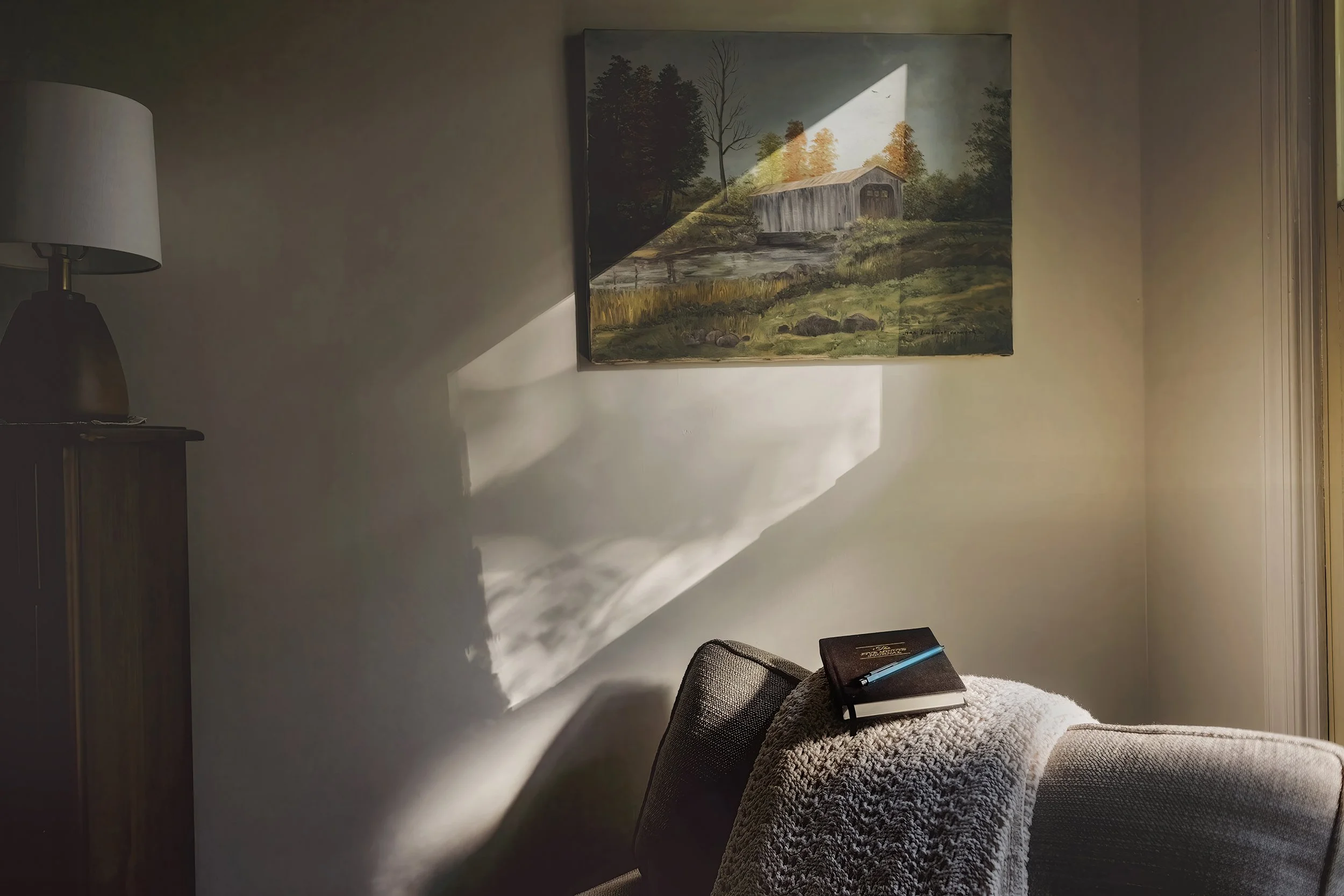
This isn’t a new photograph. I took the image back in 2016, at a time when I felt like my heart might literally break into pieces.
I’ve never known how to best process the image,
and every time I revisit the picture, I make a different version.

I sometimes sit in the car in my own driveway to read. There is something about this confinement that settles my mind and lets me relax into a good book. Inside the house, there always seems to be something else that needs doing.

The book in my hands these days—Late Migrations by Margaret Renkl.

Renkl, like all artists I think, is in awe of ordinary things. She tells this story, “Let Us Pause to Consider What a Happy Ending Actually Looks Like,” and in the last paragraph, there are these lines that make my heart tremble.

But the shadow side of love is always loss, and grief is only love’s own twin. —Margaret Renkl

I see now that I have my happy ending. It just looks different than I’d imagined.


I kept seeing these two scenes on every trip down route one. I resisted making the effort at first. Those old-fashioned roses, cascading through the untamed forest, just where Ni River crosses route one . . . there is no shoulder on the road only a concrete culvert. But they are amazing. Wild and vibrant along the side of the road, thriving, as if they had something to prove. It was this morning, soft rain falling, that I finally made the trip. I pulled on my rain boots and old jeans to protect my legs from thorns. I enlisted the help of my husband as driver to drop me off on the side of the road. Nestled among those roses, I discovered joy for this day. Sometimes finding joy feels like too much to ask.

It is the same for the solitary magnolia tree with the hay bale. Every time I drive by I marvel at those perfect hay bales, like big spools of thread. I wonder about Otis Kay and if he’s been getting any phone calls from people with horses to feed.

It’s like magic, seeing these things. Like grace and compassion and comfort for human pain and suffering. I do not take this gift for granted.


Full Service Filling Station

I try to think why this picture speaks to me. Why it calls to be made. I drive past the old abandoned gas station at least once each week. Sometimes the light is soft, shining on the white concrete. It feels like a memory that I can’t quite recall, like a word on the tip of your tongue. There are chains and ropes and pieces of fence around the perimeter warning trespassers to stay out, but today the ropes hang slack. I decide it’s okay to stand on the border and take this picture.

Once I am at home, staring at the image on the screen, the memory surfaces. This gas station reminds me of the times, when I was little, when our family would pull over to an old country store, one that sold both gas and food. Dad would come out with a small paper sack filled with a loaf of Wonder Bread and freshly sliced bologna and sodas. Mom would make sandwiches, bread and meat smashed together. Soda burps. Salty chips if we were lucky. Little legs extended over bench seats with nary a seat belt in sight.

I think this is what love looks like. And I’m lucky both my parents said those words often. I love you.

I worry that I’ve failed my children, that in trying to do my best, I’ve somehow let them down or made things harder for them. But I never fail to tell them I love you and I hope those words, and the actions that accompany them, are enough to make it all right.

Blessed are the parents whose final words on leaving—the house, the car, the least consequential phone call—are always “I love you.” They will leave behind children who are lost and still found, broken and, somehow, still whole. —Margaret Renkl, Late Migrations